The ASB Bridge: Kansas City’s Industrial Masterpiece
- AVIA AREE

- May 10
- 2 min read
Updated: May 16
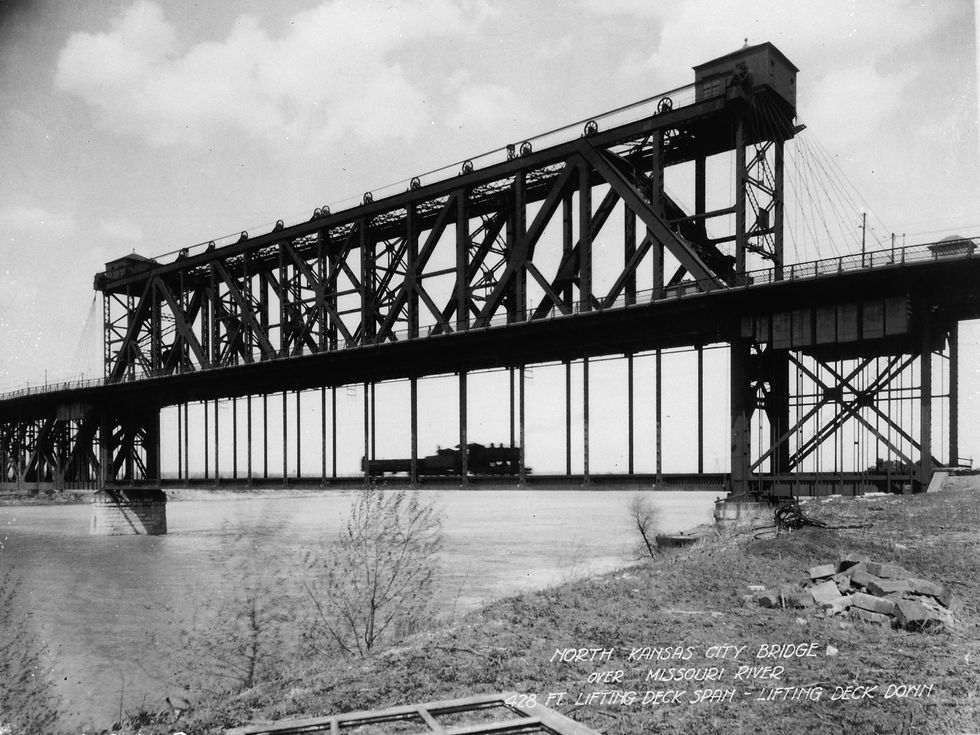
The ASB Bridge — Armour-Swift-Burlington — opened over the Missouri River in 1911. It carried the city in layers. Trains moved below. Cars, wagons, pedestrians, and streetcars crossed above. Boats passed underneath when the lower railroad span lifted into the body of the bridge.
The road stayed in place.
That was the nerve of it.
A bridge that could keep one part of the city moving while another part changed shape.
Kansas City left the machinery in the skyline.
The name still tells on itself.
Armour.Swift.Burlington.
Meatpacking. Railroads. Freight. River traffic. The economy of weight and motion. Kansas City was still tied to the stockyards then. Still moving cattle, cargo, workers, and money through hard corridors of steel.
This bridge did not arrive as decoration.
It arrived as an answer.
The river had traffic.The rails had traffic.The streets had traffic.
Kansas City needed all of it to move.
So the bridge was built in levels. The upper deck took the road. The lower deck took the rail. The lift span made room for boats. It was an industrial compromise, but a beautiful one because nobody seemed concerned with beauty at all.
That is often how the better things happen.
The ASB Bridge had presence because it had purpose.
It stood over the Missouri River like a working thought. Severe. Useful. Exact. No ornament trying to soften the point. No decorative apology for its own strength.
Today, the upper roadway is gone.
The bridge is leaner now. More skeletal. More exposed. The trains still move through it. The river still passes beneath it. The steel still holds the outline of what Kansas City once asked of itself.
You can see the new riverfront from there now. The stadium. The trails. The cleaner crossings. The fresh concrete and public plans.
And then this bridge.
Older.Grey.Still working.
It makes the new things feel younger than they know they are.
Before the riverfront became a weekend walk, it was a route.Before it became a view, it was labor.Before Kansas City turned back toward the water, it had already spent decades using the water to build itself.
The ASB Bridge is not nostalgia.It is evidence.
It reminds you that cities are not only made of restaurants, apartments, stadiums, and signage. They are made of decisions. Some practical. Some brutal. Some brilliant. Some still visible because steel keeps better records than people do.
The top did not drop.
The bottom rose.
And for one clean moment, the city understood itself in sections: road above, rail below, river underneath, all of it moving.


Comments