The Road to Shatto
- AVIA AREE

- May 15
- 3 min read
Updated: May 16

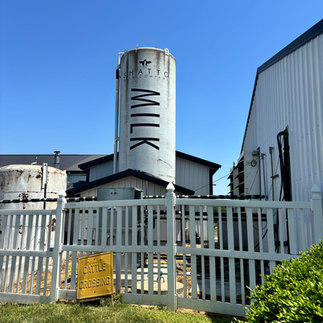


The road north starts to flatten after a while.
Kansas City disappears behind distribution centers, exits, traffic lights, and chain stores. Then the landscape opens. Wind turbines begin turning slowly over the fields. Cattle stand in clusters under the heat. Telephone poles stretch forward one after another like markers counting distance instead of time.
I packed a cooler with ice in the backseat before leaving the city. Loaded the dog into the car. Grabbed snacks. Put on a podcast. Drove north for milk.
That sounds excessive until you get there.
The first thing you notice about Shatto Milk Company is that it still feels connected to the source. Not the idea of a farm. The actual thing. You can smell the cattle in the air before you even walk fully across the parking lot. The processing area sits behind glass where visitors can watch workers moving through production. Bottles. Stainless steel. Cold rooms. White walls. The entire operation feels visible instead of hidden.
An older couple stood at the milkshake counter studying the menu when I walked in. People moved slowly. Nobody appeared rushed.
I picked up a cotton candy milk. Banana milk. A pint-sized flavored bottle. Whole milk for the week. The products are lightly pasteurized, which changes the texture immediately. Thicker. Colder. Fuller somehow. The first time I tried Shatto milk from a grocery store back in Kansas City, I could already tell it was different. Standing at the farm itself only clarified why.
Some products still carry evidence of where they came from.
That has become increasingly rare.
Shatto Milk Company began in Osborn, Missouri, north of Kansas City, where the Shatto family built a dairy operation that intentionally leaned into local distribution, glass bottles, and minimally processed milk while much of the industry moved toward industrial scale consolidation. The company became widely recognized throughout Missouri and Kansas not only for the milk itself, but for preserving an older relationship between consumer and producer — one where people still know where the dairy is located, can visit the farm, watch processing through windows, return glass bottles, and buy directly from the source.
The family’s approach has always centered around freshness, local delivery, and maintaining tighter control over the process from cow to bottle. Their milk is known for being gently pasteurized at lower temperatures than mass-market ultra-pasteurized products, preserving more of the original flavor and texture. Glass bottles became part of the identity too. Not nostalgia as branding. Function first. Glass protects flavor differently. Holds cold differently. Feels different in your hands.
And people notice.
What stands out most is not even the flavored milk, though the cotton candy bottle sitting in my cooler felt almost absurd in the best possible way. It is the commitment to locality itself. The willingness to remain smaller. Regional. Physically connected to the people buying the product.
If I had it my way, I would probably spend most days like this. Driving toward the source of things instead of away from them. Bread from the bakery. Vegetables from the field. Coffee from the roaster. Milk from the dairy.
Not because it is trendy.
Because somewhere along the way, convenience flattened too many experiences into the same experience.
At Shatto, the distance still matters.
The cooler packed with ice matters.
The smell of cattle in the summer heat matters.
The elderly couple studying the milkshake menu matters.
And under a massive Missouri sky filled with turbines, rolling farmland, and long stretches of open highway, the entire trip begins to feel less like shopping and more like participation in something older that somehow survived.


Yo! I really enjoyed this. I'm so jealous though because I've wanted to make that trip ever since I moved here and fell in love with their chocolate and strawberry milk at Hen House. There's something about how you described the drive, the cooler, the cattle smell, the glass bottles, and the older couple at the counter that made the whole thing feel bigger than just milk. That's what I liked. The line about "convenience flattening too many experiences" really hit home for me. Honestly, that's true for so much of life now. We get the product, but we lose the connection, or the journey. This made me want to slow down, take the long road, and remember where thing…